
The Black Hole
Aug 27, 2026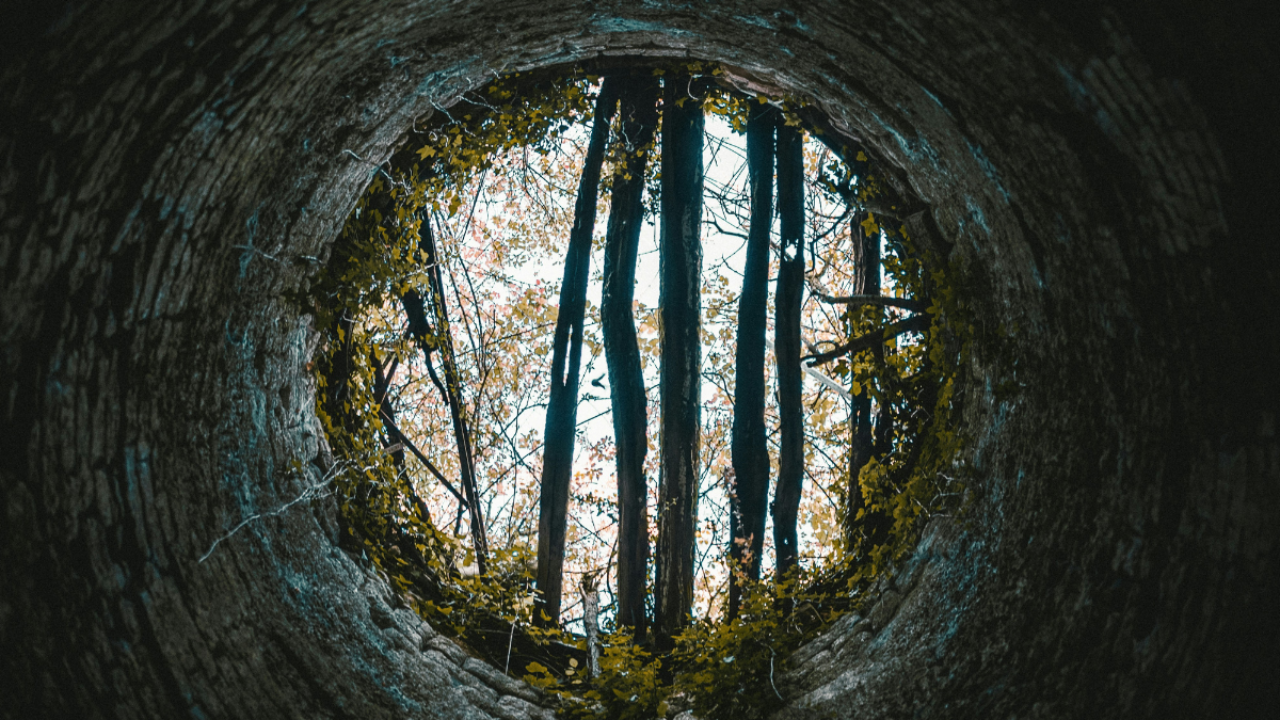
The adoption wound has been with me for as long as I can remember. But something is changing as I move through my mid-fifties. I am getting closer to its gritty centre. I can begin to see it more clearly. Name it more honestly. Feel its particular shape inside me.
For most of my life, the wound has felt like a black hole. Something vast and dark that I have spent a lifetime trying not to fall into. Some days it is far away, beyond my reach. I can move through my life and almost forget it is there. But even then, somewhere beneath everything, I know.
Sometimes it follows closely behind me, like a shadow I cannot quite outrun. Some days I find myself close to the edge of it. Other days it is less black and more smoky grey. Diffuse. Lingering. A haze rather than a void. And on the really bad days, I am inside it, floating in the deep, dark unknown. Lost. Untethered. Alone.
However it appears, wherever it appears, it is always there. And it always has been. It is the wound.
The flavour of shame
The particular flavour of this wound, for me, is what some might call shame. It has the capacity to shrink me. To make me feel small. It can take the evidence of an entire lifetime and arrange it into a convincing case against me.
Look at all the relationships that didn't work out (and there have been many). It whispers: You are the common factor. So it must be you. You must be the problem.
The logic is excruciatingly persuasive when I am in the grip of it. Relationship after relationship becomes evidence. Every ending becomes another mark against my name. And after I have conducted this brutal investigation and arrived at my inevitable conclusion, I am left with something even deeper than loneliness. I am left with existential aloneness. This is different from simply being lonely.
By this, I don't simply mean the absence of other people. I don't mean sitting alone in a room, wishing someone would come and keep me company. Existential aloneness is the much deeper and more frightening feeling that, at the most fundamental level, I am on my own in the world. That no one can truly reach me. That no one will stay. That there is no one I can completely rest into, no place where I am wholly held, and that ultimately, I must face life alone.
It is a feeling that lives beneath words and beneath circumstances. I can be surrounded by people who love me and still feel it. I can be in relationship and still encounter that vast internal sense of being fundamentally separate, untethered and without anyone to whom I truly belong.
Perhaps this is why it can feel so connected to the adoption wound.
Because for an infant, separation is not an abstract idea. We are born into relationship. We come to know ourselves through being held, soothed, mirrored and responded to. When something in that earliest field of belonging is ruptured, perhaps some part of us carries the question forward:
Will I always have to face this alone?
This is why existential aloneness is different from simply being lonely.
I have been a responsible parent since I was seventeen years old. Thirty-six years of caring, tending, being needed, showing up. And now, I genuinely love and crave time alone. Time that belongs only to me. Silence. Space. No one needing anything.
And yet, now when I finally get it, that great shadow can creep closer. The pain settles over me like a cloud moving across an open field. And there I am again, face-to-face with the question that has lived somewhere inside me for most of my life:
Am I ultimately alone?
All the ways I tried not to feel it
I have spent decades finding ways to keep the wound at bay: love addiction, alcohol addiction, work addiction, sugar addiction, scrolling addiction. Just to name a few.
For a long time, I thought of these things primarily as problems to overcome. Failings. Weaknesses. Evidence that something was wrong with me. But I understand them differently now.
Of course I reached for distraction. Of course I reached to be soothed. Of course I looked for something, or someone, to take me away from that vast internal emptiness. It makes perfect sense.
If there is an infant somewhere inside you who learned that the world could disappear, that the person you belonged to could be absent, unavailable or unreachable, why wouldn't you spend a lifetime searching for something that might finally make you feel safe? Why wouldn't you reach? Why wouldn't you soothe yourself in whatever way you could?
These strategies were not evidence of my brokenness. They were evidence of my longing.
Building a bridge
But I no longer wish to keep so much space between myself and this wound. It is exhausting. Exhausting to spend a lifetime monitoring the distance, trying not to get too close, reaching for something whenever I feel myself approaching the edge.
I am beginning to wonder what might happen if I stopped trying to outrun it. What if, instead of building walls around this black hole, I built a bridge towards it? What if I formed a relationship with this place? Not because I want to suffer, and not because I want to glorify pain, but because this wound has been asking for my attention for a very long time.
As I get closer, I can notice it differently. I can feel its shape in my body. Its colour. Its weight. Its temperature. Its movement. And as I stay with it, something else begins to come into view.
I see her, the little infant inside me. The one who was abandoned and left alone. Not only at birth, but over and over again in the years that followed, in a family dynamic where my sensitive soul was not always welcome, not always seen, not accommodated and certainly not consistently soothed.
The adoption wound did not simply belong to one moment in time.
For many of us, the original rupture can become a template through which later experiences are felt. Every experience of not being understood, not being protected, not being chosen, not being soothed can seem to echo something much older.
And the body remembers.
She needed love that landed
As I turn towards her now, I can see something with increasing clarity.
She needed so much more than she got. She needed protection, she needed soothing, she needed attunement, she needed someone to notice when she was overwhelmed. She needed someone who could stay close enough to her distress that she did not have to carry it alone. She needed love that landed.
That last part feels important to me, because love can exist around a child without reaching the places where the child most needs it. A person can be cared for and still feel profoundly unseen. They can be provided for and still feel unsafe. They can be told they are loved and still not experience the kind of attunement that allows love to settle into the body as a lived knowing.
This is part of what I am learning now. It is not enough to simply tell myself that I am worthy. Some part of me needs to experience being met. And perhaps, finally, I am becoming someone who can meet her.
Becoming the adult she needed
Something has endured in me. Something has developed. Something has grown for long enough. And now, in my mid-fifties, my adult self can turn towards this young one and recognise the enormity of what she carried. I can see that she was not too much. She was not the problem. She was not inherently unlovable. She was a child adapting to circumstances that she did not create and could not understand.
There is a particular kind of grief in realising this later in life. But there is also something profoundly hopeful, because while I cannot go back and change what happened to her, I am no longer entirely powerless in relation to what happens now.
I can become the adult she needed.
I wonder whether this is why so many of us spend our lives giving to others what we ourselves most needed. We learn how to listen because we longed to be heard. We learn how to attune because no one attuned to us. We learn how to hold because we know what it is to feel dropped. And perhaps, over time, something remarkable happens.
As we develop these capacities for others, they slowly become available within us too. We grow the very thing our wounded selves have been waiting for. And eventually, perhaps, we discover that we have developed something in exactly the right shape and size.
A perfect fit.
For an adoptee, it may be one of the first times we begin to understand what just right feels like.
An unexpected gift of this threshold
I have complained plenty about perimenopause: the symptoms, the changes, the slowing down of a body I once expected to simply keep going. But increasingly, I see this time of life as an initiation. A threshold that cannot be undone. Something is asking to be relinquished. Something else is trying to emerge.
Perimenopause is slowing me down enough that I can no longer outrun myself in quite the same way. The old strategies do not work as reliably. The distractions lose some of their power. And so I must feel. I must sit with hurts from the past. I must learn new ways of being with this wound, new ways of showing up in the world ...more honestly, more authentically and with greater sovereignty.
For much of my life, I wondered: Who am I? For three decades, I looked backwards. I searched for my hidden roots. I tried to piece together the story of where I came from and who I belonged to. And that search mattered deeply. It was necessary. There were truths that needed to be found and stories that needed to be reclaimed.
But this particular initiation is asking something different of me. It is bringing me into the present. It is asking: Who are you now? Not who might you have been if things had been different. Not only who did you come from. Not only where do you belong. But who are you becoming when you stop abandoning yourself in order to keep others close?
Who are you when you no longer have to run from the black hole?
Perhaps the wound is not asking to be fixed
I don't know that the adoption wound will ever completely disappear. Perhaps that is not the point. I don't believe healing is the eradication of the wound. Perhaps it is more about learning that I can approach it without disappearing into it. That I can stand at its edge and remain connected to myself. That even when I find myself floating in that deep, dark place, I am not as alone as I once was. Because now, someone is looking for me.
Me. The adult I have become is learning how to turn towards the infant who was left alone. To sit beside her. To feel what she feels without rushing to fix it. To offer what she was missing. Protection. Attunement. Soothing. Presence. Love that lands.
The black hole is still there.
Some days it is close. Some days it is far away. Some days it is black, and some days smoky grey. But I am tired of spending my life trying to keep my distance.
So I am building a bridge. Slowly. Carefully. One plank at a time.
And perhaps this is what growing older is teaching me: that the deepest journey is not always the journey away from our wounds. Sometimes it is the journey towards them. Not to be consumed by them. But to find, waiting somewhere in the darkness, the part of ourselves that has been waiting all along to be found.
And this time, I am not leaving her there.
Author


